

Why Smart Building Safety Is No Longer Optional
Modern facilities are no longer just about comfort or energy efficiency. Today, revealing risks before they escalate is the real priority. From sports arenas to industrial plants, building automation has evolved into a critical safety backbone.
Honeywell’s recent strategic partnership with Hornets Sports & Entertainment is a strong signal of where the future is heading: AI-powered, connected, and safety-first environments.
From Smart Venues to Smart Safety Ecosystems
What Honeywell’s Partnership Really Tells Us
While the announcement focuses on NBA facilities, the underlying message goes far beyond sports. Honeywell is investing in integrated digital ecosystems where safety systems, building management, and real-time analytics work together.
This same approach is already shaping:
-
Industrial facilities
-
Refineries and petrochemical plants
-
Data centers
-
Large commercial complexes
At the core of this transformation lies one essential principle:
You cannot automate what you cannot safely monitor.
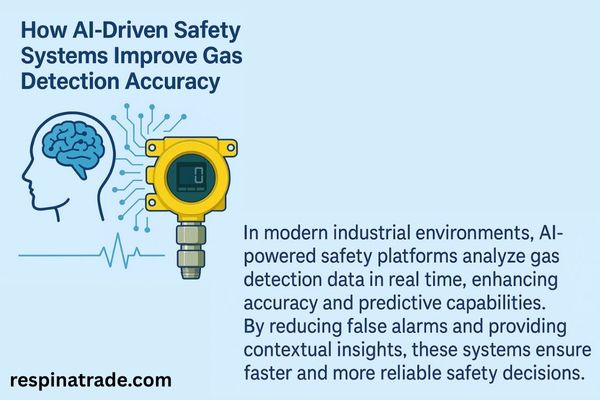
The Role of AI in Life Safety and Hazard Detection
Why Automation Needs Reliable Detection Systems
AI-driven platforms like Honeywell Forge enable real-time decision-making. But for these platforms to work effectively, they rely on accurate, field-level safety data.
This is where advanced detection systems come in, including:
-
Fire detection
-
Gas leak detection
-
Environmental monitoring
Without precise gas detection inputs, even the smartest automation platform becomes blind to invisible risks.
Gas Detection: A Critical Layer in Smart Facilities
Why Gas Detection Completes the Safety Puzzle
In connected buildings and industrial environments, combustible and toxic gases remain one of the most serious threats. AI-driven automation enhances response — but early detection still starts at the sensor level.
Honeywell gas detection solutions are designed to:
-
Deliver continuous, real-time data
-
Integrate seamlessly with building automation systems
-
Support faster, smarter emergency responses
Products like the Searchpoint Optima Plus Gas Detector play a key role by providing reliable, low-maintenance detection in harsh and safety-critical environments.
From Stadiums to Industrial Sites: One Unified Safety Logic
What Industrial Operators Can Learn from Smart Venues
The same technologies used in modern sports arenas apply directly to industrial safety strategies:
-
Centralized monitoring
-
Predictive maintenance
-
Reduced downtime
-
Faster incident response
In facilities where gas leaks can lead to shutdowns, injuries, or worse, integrating gas detection into an AI-driven safety ecosystem is no longer optional — it’s a strategic decision.
Why Honeywell’s Strategy Strengthens Trust in Its Safety Products
Beyond Hardware: A Systems-Level Approach
Honeywell’s strength lies not only in individual products but in how those products fit into a broader system:
-
Smart fire detection
-
AI-powered building management
-
Integrated gas detection networks
This system-level thinking is exactly why Honeywell solutions are widely adopted in high-risk, high-visibility environments worldwide.
Final Thoughts: Smart Buildings Start with Smart Safety
The Bigger Picture
Honeywell’s partnership with Hornets Sports & Entertainment highlights a global trend: the future of smart buildings is inseparable from advanced safety systems.
For industrial operators, facility managers, and safety engineers, the takeaway is clear:
AI and automation deliver real value only when built on a foundation of reliable detection and life safety technologies.
As smart facilities continue to evolve, gas detection systems like Searchpoint Optima Plus will remain a cornerstone of safe, connected environments.
🔗 Suggest Other Product
Looking for a gas detection solution that integrates seamlessly with modern automation systems?
Explore Honeywell’s Searchpoint Optima Plus and discover how smart detection supports smarter facilities.